AI-native companies are hiring design pros who can prove they already use AI in their work. Here's the ladder, the titles, and the moves that work.
The career path below covers the title ladder, the comp at each level, and the moves that get an AI-fluent design pro from where they are to where AI-native design pros work.
The bigger picture: For designers, the move is to ship one AI product surface in your portfolio. Even a side project. Show the eval design, the error states, and the empty states for AI behavior. AI-native companies hire design pattern fluency over visual polish, and almost no one is showing the work that demonstrates it.
The Ladder
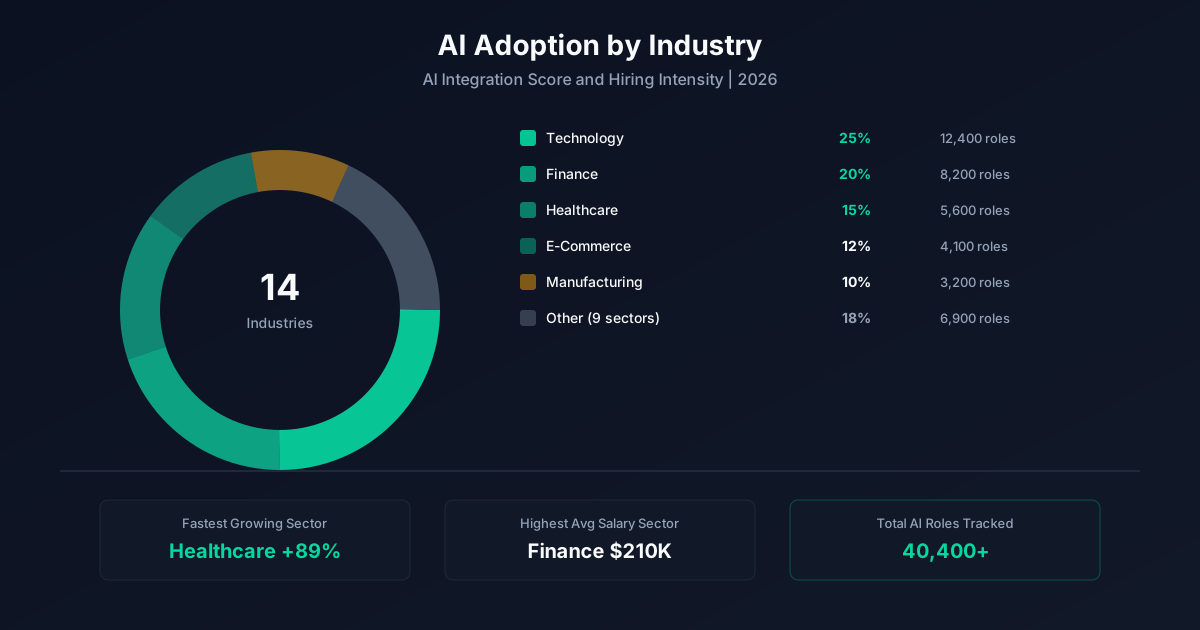
The titles below reflect where AI-skilled design pros sit at AI-native companies and AI-forward incumbents. Ranges are total compensation including equity. Numbers reflect the band you'd see for AI-skilled candidates at established U.S. companies.
Typical duration: 0-2 years
AI skills at this level: Midjourney, Figma AI, ChatGPT for content
Typical duration: 2-5 years
AI skills at this level: Conversational UX patterns, AI-assisted prototyping
Typical duration: 5-8 years
AI skills at this level: Full AI product design literacy, eval design, error states for AI
Typical duration: 8+ years
AI skills at this level: Hiring designers for AI, design systems for AI products
Typical duration: 10+ years
AI skills at this level: Design strategy at AI scale
Common Moves
The moves below are pulled from real career patterns we've seen on LinkedIn and in our hiring data. Each one has a pattern. The pattern matters more than the individual story.
Add Figma AI fluency and ship a portfolio piece for an AI product. AI companies need brand range plus product chops.
Study chatbot, agent, and copilot patterns. Most product design roles at AI companies want strong AI pattern literacy.
Where AI Design Pros Work
The market for AI-skilled design pros is concentrated in four bands:
How To Make The Move
For the underlying skills you'll need to demonstrate, see the skills page. For the comp at each level, see the salary page.
Timing
For most design pros with 3+ years of experience, the transition into AI-skilled work at an AI-forward company takes 3-9 months from "I want to do this" to signed offer:
Senior candidates and very specific specializations can compress this to 2-3 months. Earlier-career candidates often take longer because they need to build the artifact first.
A Worked Example
Here's the kind of artifact that moves an AI-fluent design pro up the ladder:
A senior product designer at an AI scale-up shipped an onboarding agent inside the product that walks new users through their first three workflows. The designer owned the prompt design, the eval criteria for helpfulness, and the failure-mode UI (confidence indicators, fallback to human handoff, undo and edit affordances). Activation rate on day-7 retention rose from 38% to 61%. The designer presented the work at Config and was offered a design lead role at a frontier lab.
The pattern matters more than the specific tools or numbers. Documented work, measurable outcomes, and a story you can tell externally are the three things that move design pros from median to top quartile in 2026.
Putting It Together
Career Path is one piece of the AI-for-design story. The full picture covers what AI is changing about the work (the risk page), the skills employers want (the skills page), the tools AI-fluent pros use (the tools page), what the work pays (the salary page), where the hiring is happening (the jobs page), the curriculum to close any gaps (the learn page), and the career path that connects them (the career page).
Most design pros end up reading three or four of these pages before they make a move, because the questions are connected. The skills you need depend on the role you're targeting; the salary band depends on the seniority and company type; the curriculum that gets you there depends on what you're starting from. The hub at /ai-for-design/ ties the pieces together with the strategic synthesis: what's actually happening in design, what to do about it, and how to think about your next move.
If you're early in the process, start with the risk page for the honest read on what AI is and isn't changing in design. If you're closer to a job move, the jobs page and career page are the highest-impact reads. If you're trying to grow inside your current role, the learn page is the practical sequence.
Common Questions
The questions below come from design pros at every stage, junior to executive. If you don't see yours, the related pages link out to the deeper coverage on each topic.
Build one AI-augmented design workflow at your current company. Document the result. Then either get promoted internally or use it as your interview story for AI-native companies. Most successful transitions take 3-9 months.
Not yet. The 'AI [Function]' title is still emerging. What matters is the work you've shipped, not the title on your business card. Most hiring managers care about evidence first.
Depends on whether your company is adopting AI. If they are, accelerate inside. If they're not, the comp ceiling is real and the move out makes sense once you have an artifact.
Median AI-skilled design pros earn 46% more than non-AI peers. Top of market at AI labs and scale-ups can run 50-100% above traditional design comp at the same seniority.
Many AI-forward companies aren't AI-product companies. Stripe, Salesforce, Notion, Linear, and others are hiring AI-skilled functional pros without selling AI products. The premium still applies.
Keep Going
The pages below cover the rest of the picture. Each one is a self-contained answer to a different long-tail question. Most design pros end up reading three or four before they apply somewhere or make their next move.
Methodology
Every number on this page comes from a continuously updated dataset of 22,351 weekly job postings across 42 roles and 14 industries. Salary figures are derived from postings that disclose compensation and weighted by seniority, location, and remote status. AI penetration percentages reflect the share of postings in each function that explicitly require or prefer AI skills. Premium calculations compare median compensation for postings tagged AI-skilled against postings in the same function and seniority without AI requirements. The dataset refreshes every Sunday; the snapshot used for this page is dated the week shown above.
Sources & notes. Source dataset: AI Pulse weekly job posting index (n=22,351). Salary disclosure rate: 6.4% of postings include compensation. Premium calculations require minimum n=20 postings per role-seniority cell. Updated weekly. For methodology questions, see the About page.
Last updated: 2026-08-24.
One email a week. AI adoption data, salary shifts, and the skills worth learning. No fluff.
Subscribe Free AI Pulse