Data & Analytics pros with AI skills earn 108% more, with median AI-skilled comp at $224,200. Here's the full breakdown by seniority, geo, and skill cluster.
The numbers below come from postings that disclose compensation. The pattern is consistent across our dataset: AI-skilled data & analytics roles pay meaningfully more than the same roles without AI requirements, and the premium grows with seniority.
The bigger picture: Pick one of three lanes: applied AI engineering (RAG, agents, evals), modern ML (fine-tuning, post-training), or analytics engineering with AI-assisted workflows. Each lane has a clear progression and clear comp band. Generalists are at most risk; specialists with shipped production work are at the top of the market.
The Premium
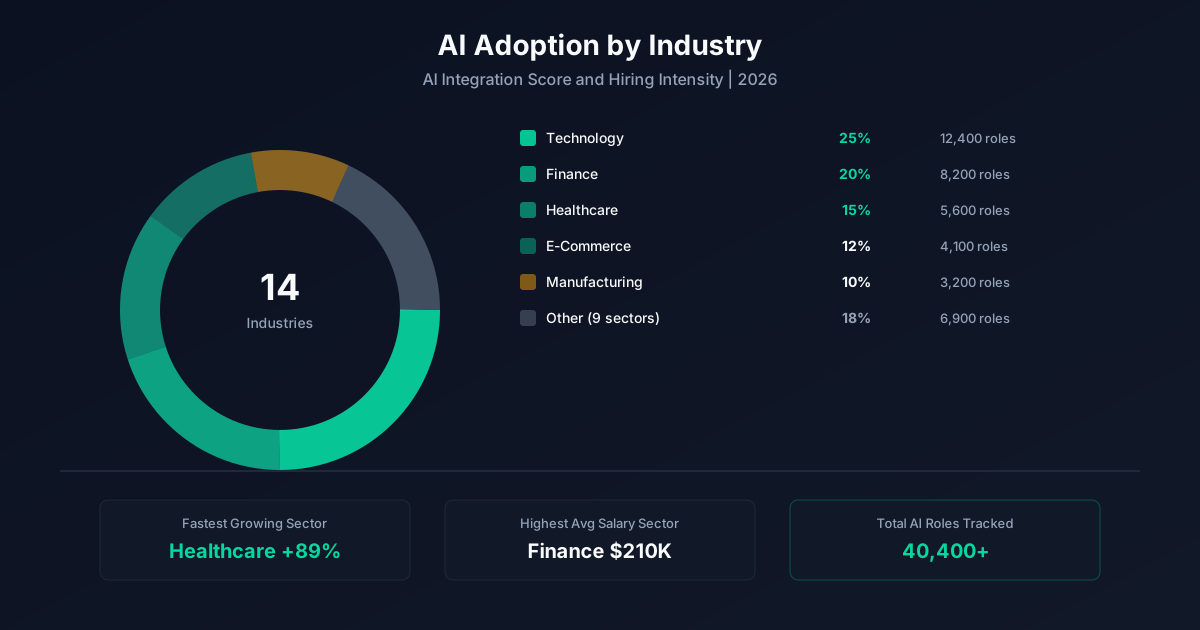
Data & Analytics pros with AI skills earn 108% more than peers without. The math, on AI Pulse data:
That's $116,200 more per year, every year, before bonus and equity. Over a 10-year career, the cumulative gap exceeds $1,394,400 once raises compound.
By Seniority
The AI premium is largest at the senior IC and lead/manager level. Junior data & analytics hires get a smaller absolute bump because their base is lower, but the percentage delta is similar.
| Level | Without AI | With AI | Delta |
|---|---|---|---|
| Junior (0-2 yr) | $70,200 | $145,730 | +$75,530 |
| Mid (2-5 yr) | $108,000 | $224,200 | +$116,200 |
| Senior (5-8 yr) | $151,200 | $325,090 | +$180,110 |
| Lead/Manager (8+ yr) | $199,800 | $448,400 | +$267,260 |
Numbers are estimates derived from AI Pulse's salary data plus standard seniority multipliers. Actual offers vary by company, location, and equity composition.
By Geography
AI premiums are largest in San Francisco, New York, and Seattle. Remote roles at AI-native companies often pay SF rates regardless of where you live, which has narrowed the geographic gap for AI-skilled work specifically.
Top-Paying Companies
For data & analytics roles with AI skills, the highest cash and equity offers come from:
AI labs typically lead on cash. AI-native scale-ups lead on equity upside if you bet right. Big tech leads on stability.
How To Move Up
Three things separate top-paid AI-skilled data & analytics pros from the median:
For the path to get there, see the 6-week curriculum. For the title ladder and comp at each level, see the career transition page.
A Worked Example
Here's the kind of work that puts an AI-skilled data & analytics pro into the top quartile of their comp band:
A senior data scientist at a logistics company shipped a RAG system over the company's incident reports, runbooks, and on-call documentation using LangChain plus Pinecone. On-call engineers query the system in Slack to get prior incident context in seconds instead of minutes. Mean time to recovery dropped from 47 minutes to 22 minutes over a quarter. The scientist published a writeup that drew offers from three AI-native scale-ups.
The pattern matters more than the specific tools or numbers. Documented work, measurable outcomes, and a story you can tell externally are the three things that move data & analytics pros from median to top quartile in 2026.
Putting It Together
Salary is one piece of the AI-for-data & analytics story. The full picture covers what AI is changing about the work (the risk page), the skills employers want (the skills page), the tools AI-fluent pros use (the tools page), what the work pays (the salary page), where the hiring is happening (the jobs page), the curriculum to close any gaps (the learn page), and the career path that connects them (the career page).
Most data & analytics pros end up reading three or four of these pages before they make a move, because the questions are connected. The skills you need depend on the role you're targeting; the salary band depends on the seniority and company type; the curriculum that gets you there depends on what you're starting from. The hub at /ai-for-data-analytics/ ties the pieces together with the strategic synthesis: what's actually happening in data & analytics, what to do about it, and how to think about your next move.
If you're early in the process, start with the risk page for the honest read on what AI is and isn't changing in data & analytics. If you're closer to a job move, the jobs page and career page are the highest-impact reads. If you're trying to grow inside your current role, the learn page is the practical sequence.
Common Questions
The questions below come from data & analytics pros at every stage, junior to executive. If you don't see yours, the related pages link out to the deeper coverage on each topic.
Median compensation for AI-skilled data & analytics roles is $224,200, compared to $108,000 without AI skills. That's a 108% premium, or +$116,200 per year.
Senior and staff-level data & analytics roles at AI labs and AI-native scale-ups pay the most. At the top of the market, total compensation can exceed $560,500 including equity.
Sometimes. At AI-native companies, yes. At legacy companies, the bump usually shows up at your next promotion or external offer rather than mid-cycle. Outside offers are the fastest accelerant.
Remote at an AI-native company often pays SF rates without geo adjustment. Remote at a legacy company is usually banded by geography. The AI-native vs legacy gap matters more than remote vs in-office.
Yes. Walk in with two data points: the 108% premium for AI skills in data & analytics, and a specific example of AI work you've done. Anchor your ask above the median, not at it.
Keep Going
The pages below cover the rest of the picture. Each one is a self-contained answer to a different long-tail question. Most data & analytics pros end up reading three or four before they apply somewhere or make their next move.
Methodology
Every number on this page comes from a continuously updated dataset of 22,351 weekly job postings across 42 roles and 14 industries. Salary figures are derived from postings that disclose compensation and weighted by seniority, location, and remote status. AI penetration percentages reflect the share of postings in each function that explicitly require or prefer AI skills. Premium calculations compare median compensation for postings tagged AI-skilled against postings in the same function and seniority without AI requirements. The dataset refreshes every Sunday; the snapshot used for this page is dated the week shown above.
Sources & notes. Source dataset: AI Pulse weekly job posting index (n=22,351). Salary disclosure rate: 6.4% of postings include compensation. Premium calculations require minimum n=20 postings per role-seniority cell. Updated weekly. For methodology questions, see the About page.
Last updated: 2026-08-24.
One email a week. AI adoption data, salary shifts, and the skills worth learning. No fluff.
Subscribe Free AI Pulse